Thursday, February 18, 2016

New Zealand cliffs collapse in Christchurch earthquake

Cliffs have collapsed in New Zealand during an earthquake in the city of Christchurch on the South Island.
No serious damage or fatalities were reported in the Valentine's Day quake that struck at 13:13 local time (00.13 GMT).
Beaches to the east of Christchurch were busy with swimmers and surfers when rocks began to fall into the sea.
The 5.7 magnitude quake occurred days before the anniversary of a deadly one in 2011.
That destroyed the city centre and killed 185 people.
New Zealand lies on the notorious Ring of Fire, the line of frequent quakes and volcanic eruptions that circles virtually the entire Pacific rim.
 Collapsing cliff in Christchurch, New ZealandImage caption The earthquake, classified as severe, lasted less than 30 seconds3

New Zealand's seismological body GNS Science classified Sunday's earthquake as "severe", recording that it took place at a depth of 15km (nine miles) and 15km to the east of the city.Resident Stephen O'Dwyer said he was on the beach with his wife walking their dog when the cliff in Sumner started to collapse.
"The ground started to go soft. Water was coming up under the sand and people were sinking down to the ankles as the ground went soft. It shook for about 20 seconds," he told the BBC.
The quake sent large clouds of dust billowing over the suburb.
 
Dust rising from Scarborough Beach cliff collapse - 14 February 2016

The cliff that collapsed was in the coastal suburb of Sumner 
"I have to say that it was business as usual 15 minutes after the fact," said local Richard Loffhagen, who took a photograph of the dust and debris rising from Scarborough Beach.
During the tremor, which was reportedly felt across the South Island, some shops in Christchurch were evacuated and photos on social media showed items that had fallen off shelves.
A Polish couple posted a clip on YouTube showing the cracks their house suffered, saying it was their first experience of an earthquake in Christchurch and they had not expected it to be so intense.
Ring of fire
Are you in Christchurch? Have you been affected by the earthquake? You can share your experience by emailing haveyoursay@bbc.co.uk.
Please include a contact number if you are willing to speak to a BBC journalist. You can also contact us in the following ways:


Severe earthquake south of New Zealand felt as far north as Dunedin

The location of this morning's 6 magnitude quake.
GEONET
The location of this morning's 6 magnitude quake.

Ads by Google

8 Golf Swing Mistakes?squaretosquaremethod.com
Hit Monster Drives with Accuracy. Free Golf Swing Video Lessons Here!
People as far north as Dunedin are reporting feeling a "severe" earthquake which struck far to the south of the country.
The 6 magnitude earthquake hit at 8.28am, 175km southwest of Snares Islands at a depth of 10km.
Geonet had recorded seven felt reports as of 9.02am. It was classified as "severe".
Several people in Southland and at least one in Dunedin have reported feeling the quake.
On Facebook, Irene-Síomhaith West said she felt the earthquake in North East Valley in Dunedin.
"Jolted me awake when it hit."
Department of Conservation operations manager for Murihiku Tony Preston said no DOC staff or members of the public were on Snares Island, and it was believed no-one was on any of the sub-Antarctic islands at the moment either.

Monday, February 15, 2016

Dozens Of Guns & Over 20,000 Rounds Of Ammo Seized From 2 Muzzies In Greece After Crossing Turkish Border | Another Caught With 200,000 Rounds


“Greece’s coast guard has reportedly arrested two “heavily armed” British men carrying more than a dozen guns and thousands of rounds of ammunition from Turkey, a top security official said.
A high-ranking security official told AP that the suspects were both Iraqi-born British subjects in their 20s. The official spoke on condition of anonymity because he was not authorized to comment on the ongoing investigation.
The two were arrested Saturday night by coast guard officers near the port of the Greek city of Alexandroupolis, off the Turkish border.
The two suspects were driving a trailer loaded with more than a dozen guns of an unspecified type and well over 20,000 rounds of ammunition, the security official said.”
Read More: https://www.rt.com/news/332404-greece-turkey-arms-smuggling/
“THESSALONIKI, Greece – Greek police say they arrested a British citizen on the main border crossing to Turkey carrying a large weapons cache.
The 40-year-old suspect is an Iraqi Kurd, a police official told The Associated Press on condition of anonymity because he wasn’t authorized to speak about an ongoing investigation. Police say they seized four air rifles, eight scopes and 200,000 .22-caliber bullets.”
Read More: http://www.foxnews.com/world/2016/02/14/suspect-arrested-with-guns-bullets-at-greece-turkey-border.html

SN7

Wednesday, February 10, 2016

Hong Kong riot police fire warning shots in bloody street clashes


Hong Kong riot police fired warning shots on Tuesday during clashes that erupted in the Chinese-ruled city when authorities tried to remove illegal street stalls set up for Lunar New Year celebrations, the worst violence since pro-democracy protests in 2014.
Demonstrators prised bricks from the sidewalk to hurl at police, while others toppled street signs and set fire to rubbish bins in Mong Kok, a tough, working-class neighborhood just across the harbor from the heart of the Asian financial center.
"We have noticed a shift in some members of the public," said Hong Kong Police Commissioner Lo Wai-chung. "(They) have an inclination to use violence or radical acts in order to express their opinion."
Nearly 90 police sustained injuries ranging from fractured bones to lacerations and bruises and 54 protesters were arrested, Lo said. Hong Kong television showed police officers being beaten with poles and sticks as they lay on the ground.
Many protesters and police were also shown with blood streaming down their faces.
Police said two warning shots were fired into the air, with pepper spray and batons also used to disperse the crowd. Television footage showed the shots were fired as protesters surrounded traffic police, pelting them with rubbish, bricks and bottles and wrestling one of them to the ground.
Lo said the life of the officer who fired the shots was being threatened. He also said there would be a full investigation into the incident.
The remains of burned bins and flower pots, chunks of brick and broken bottles lay scattered along the Nathan Road shopping strip, which leads to the harbor at Tsim Sha Tsui. A taxi with shattered windows was parked nearby.
The narrow streets in and around Mong Kok were the scene of some of the most violent clashes during protests in late 2014 to demand greater democracy for the former British colony that returned to Beijing rule in 1997.
The violence broke out after police moved in to clear illegal vendors who sell local delicacies, trinkets and household goods from makeshift streetside stalls.
The hawkers, a common sight on Hong Kong's bustling streets, quickly attracted a strong social media following under the hashtag #FishballRevolution.
Hong Kong Chief Executive Leung Chun-ying said the government strongly condemned the violence. Secretary for Security Lai Tung-kwok said police were investigating indications the clashes had been organized.
The protesters had dispersed by 8 a.m. (7.00 p.m. ET on Monday) but more than 100 had confronted police in a tense, pre-dawn stand-off during the Lunar New Year holiday, when most of the city is shut down.
Police said they did not expect another riot on Tuesday night, when new year fireworks are planned over the harbor, but they were boosting manpower nonetheless.
Hong Kong Indigenous, a "localist" group that is fielding a candidate in a Legislative Council by-election in a few weeks, was involved in the protest, though it was not immediately clear the role it played or the extent to which it was involved.
The group said on its official Facebook page and confirmed to Reuters that its candidate, Edward Leung Tin-kei, had been arrested.
Many so-called localists remain deeply embittered by the lack of any concessions from Beijing or Hong Kong authorities during the 2014 protests. Television footage showed protesters on Tuesday shouting: "Establish a Hong Kong country!" during running battles with police.
The clashes in December 2014 came when authorities cleared the last of pro-democracy demonstrators from the streets after more than two months of protests that had presented Beijing with one of its greatest political challenges in decades.
(Additional reporting by Anne Marie Roantree, Bobby Yip and James Pomfret; Editing by Paul Tait and Nick Macfie)

An unidentified injured man is escorted by riot police at Mongkok in Hong Kong, China February 9, 2016.
Reuters/Bobby Yip

Monday, February 8, 2016

2/06/2016 -- Colorado shaken up by M4.0 earthquake at Fracking / Oil pumping operation


Deadly earthquake topples buildings in Taiwan city of Tainan

An earthquake has toppled buildings in the south Taiwanese city of Tainan, killing at least 11 people.
The magnitude 6.4 quake struck just before 04:00 (20:00 GMT Friday) when most people were at home asleep.
A baby was among at least four people killed when a high-rise building, containing 100 homes, collapsed.
At least 30 people remain missing. Tainan's mayor said people were alive but trapped under the rubble and all means would be used to rescue them.

President Ma Ying-jeou, who toured the city of two million, said shelters would be set up for those who had lost their homes.

Leaning ruins

Television pictures showed rescue workers frantically trying to reach people trapped in collapsed buildings, using ladders to climb over piles of rubble.
One of the worst affected was the 17-storey Wei Kuan apartment complex, home to at least 256 people.
More than 200 people were rescued, but a baby, young girl and two adult men did not survive, officials said. At least 70 people were taken to hospital.
Interior Minister Chen Wei-jen said he feared more people may have been in the fallen apartment block than usual as families gathered to celebrate Chinese New Year.
He said investigators would examine whether the building's construction met requirements.

Rescuers search the collapsed building in Tainan, Taiwan, on 6 February 2016Rescuers help a survivor escape the collapsed building in Tainan, Taiwan, on 6 February 2016
Collapsed building in Tainan, Taiwan, on 6 February 2016
Residents told how they were able to escape from their homes in the block, using their own tools and ladders.
"I used a hammer to break the door of my home which was twisted and locked, and managed to climb out," one woman told local TV.
Another man tied clothes together to make a rope and lowered himself from the ninth floor to the sixth floor below, Apple Daily reports.
One Tainan resident said his bed turned over as the wall collapsed. "My home completely turned into debris. I didn't know what was happening. I was really frightened as I have never seen such an earthquake," he said.
A 35-year-old woman described how she and her two children were pulled from the rubble.
"Rescue workers broke through (the building) layer by layer. And they asked us to climb out but I said my children are too small to climb. So they dug a bigger hole. Then one rescue worker tried his best to climb in and take the children out. Then I slowly climbed out myself," she said.
 Survivor of a collapsed building in Tainan, Taiwan, on 6 February 2016

Rescuers in Tainan, Taiwan, on 6 February 2016Crushed vehicles are seen under a building that was damaged after a powerful earthquake hit TainanMap showing Tainan
The quake was shallow, meaning its effects would have been amplified, the US Geological Survey (USGS) said.
There have also been at least five aftershocks. The quake was felt in the capital Taipei, 300 km away.
Although the damage does not appear to be widespread, a number of tall buildings have been left leaning precariously.
There are also reports of power outages, and transport links have been disrupted on what is one of the busiest travelling days of the year ahead of the Chinese New Year holiday.
Taiwan lies near the junction of two tectonic plates and often sees tremors.
Beijing has offered assistance although at the moment at least, given the relatively limited scale of the disaster, it does not look as if much outside help is needed, the BBC's John Sudworth reports from the Chinese capital.
Back in 1999, when a 7.6 magnitude quake killed more than 2,300 people in central Taiwan, a similar offer of help from the mainland became embroiled in political wrangling, with Taiwan accusing China of exploiting the situation for its own political ends, our correspondent adds.

Thursday, January 28, 2016

Five things you need to know about Zika

Updated 2254 GMT (0654 HKT) January 27, 2016

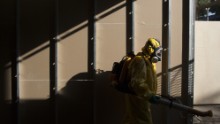
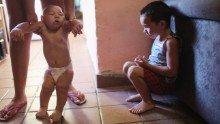
 A health worker sprays insecticide under the bleachers of Rio de Janeiro's Sambadrome on Tuesday, January 26, to combat the Aedes aegypti mosquitoes that transmit the <a href="http://www.cnn.com/specials/health/zika" target="_blank">Zika virus.</a> The World Health Organization expects the virus, which is linked to a neurological birth disorder, to spread to <a href="http://www.cnn.com/2016/01/25/health/who-zika-virus-americas/index.html" target="_blank">almost every country in the Americas.</a>David Henrique Ferreira, a 5-month-old who has microcephaly, is watched by his brother in Recife, Brazil, on Monday, January 25. Since November, Brazil has seen nearly 4,000 cases of microcephaly in babies born to women who were infected with Zika. The disorder results in newborns with abnormally small heads and abnormal brain development.
(CNN)A relatively new mosquito-borne virus is prompting worldwide concern because of an alarming connection to a neurological birth disorder and the rapid spread of the virus across the globe.
The Zika virus, transmitted by the aggressive Aedes aegypti mosquito, has now spread to at least 24 countries. The Centers for Disease Control and Prevention is warning pregnant women against travel to those areas; health officials in several of those countries are telling female citizens to avoid becoming pregnant, in some cases for up to two years.
The U.S. Defense Department is offering voluntary relocation to pregnant employees and their beneficiaries who are stationed in affected areas.
"That's a pandemic in progress," said Dr. Anthony Fauci, director of the National Institute of Allergy and Infectious Diseases at the National Institutes of Health. "It isn't as if it's turning around and dying out, it's getting worse and worse as the days go by."
Here are five important things to know:

1. What is Zika and why is it so serious?

The Zika virus is a flavivirus, part of the same family as yellow fever, West Nile, chikungunya and dengue. But unlike some of those viruses, there is no vaccine to prevent Zika or medicine to treat the infection.
Zika is commanding worldwide attention because of an alarming connection between the virus and microcephaly, a neurological disorder that results in babies being born with abnormally small heads. This causes severe developmental issues and sometimes death.
What is the Zika virus?

What is the Zika virus? 01:55
Since November, Brazil has seen 4,180 cases of microcephaly in babies born to women who were infected with Zika during their pregnancies. To put that in perspective, there were only 146 cases in 2014. So far, 51 babies have died.
Other Latin American countries are now seeing cases in newborns as well, while in the United States one Hawaiian baby was born with microcephaly linked to the Zika virus after his mother returned from Brazil. Several states have confirmed the virus in individuals who traveled to areas where the virus is circulating, including Illinois, where health officials are monitoring two infected pregnant women.
The CDC is asking OB-GYNs to review fetal ultrasounds and do maternal testing for any pregnant woman who has traveled to one of the 24 countries where Zika is currently active.
A smaller outbreak of Guillain-Barre syndrome, a rare autoimmune disorder that can lead to life-threatening paralysis, is also linked to Zika in a several countries.

2. How is Zika spread?

The virus is transmitted when an Aedes mosquito bites a person with an active infection and then spreads the virus by biting others. Those people then become carriers during the time they have symptoms.
In most people, symptoms of the virus are mild, including fever, headache, rash and possible pink eye. In fact, 80% of those infected never know they have the disease. That's especially concerning for pregnant women, as this virus has now been shown to pass through amniotic fluid to the growing baby.
"What we now know," said Dr. Lyle Petersen, director of the CDC's Division of Vector-Borne Diseases, "is that fetuses can be infected with the virus. That's not new for infectious diseases, but it is new for this virus."
"This is a very remarkable and unusual situation," agreed Fauci, "because the other flaviviruses don't do that to our knowledge. You just don't see that with dengue or West Nile or chikungunya."
In addition, the CDC says there have been documented cases of virus transmission during labor, blood transfusion, laboratory exposure and sexual contact. While Zika has been found in breast milk, it's not yet confirmed it can be passed to the baby through nursing.
There have been only two documented cases linking Zika to sex. During the 2013 Zika outbreak in French Polynesia, semen and urine samples from a 44-year-old Tahitian man tested positive for Zika even when blood samples did not. Five years before that, in 2008, a Colorado microbiologist named Brian Foy contracted Zika after travel to Senegal; his wife came down with the disease a few days later even though she had not left northern Colorado and was not exposed to any mosquitoes carrying the virus.

3. Where is the Zika virus now?

The Zika virus is now being locally transmitted in Barbados, Bolivia, Brazil, Cape Verde, Colombia, Dominican Republic, Ecuador, El Salvador, French Guiana, Guadeloupe, Guatemala, Guyana, Haiti, Honduras, Martinique, Mexico, Panama, Paraguay, Puerto Rico, Saint Martin, Suriname, Samoa, the U.S. Virgin Islands and Venezuela, says the CDC.
Zika has arrived in the United States, but only from travelers returning from these infected areas. The concern, of course, is whether these imported cases could result in locally transmitted cases within the United States.
The Aedes albopictus, or Asian tiger mosquito, which along with Aedes aegypti transmits Zika virus, is present in many areas of the United States.
Will Zika virus spread to U.S.?

Will Zika virus spread to U.S.? 02:25
If mosquitoes in the United States do become carriers, a model created by Toronto researchers found more than 63% of the U.S. population lives in areas where Zika virus might spread during seasonally warm months. A little over 7% of Americans live in areas where the cold might not kill off the mosquito in the winter, leaving them vulnerable year round.

4. What can you do to protect yourself against Zika?

With no treatment or vaccine available, the only protection against Zika is to avoid travel to areas with an active infestation. If you do travel to a country where Zika is present, the CDC advises strict adherence to mosquito protection measures: Use an EPA-approved repellent over sunscreen, wear long pants and long-sleeved shirts thick enough to block a mosquito bite, and sleep in air-conditioned, screened rooms, among others.
If you have Zika, you can keep from spreading it to others by avoiding mosquito bites during the first week of your illness, says the CDC. The female Aedes aegypti, the primary carrier of Zika, is an aggressive biter, preferring daytime to dusk and indoors to outdoors. Keeping screens on windows and doors is critical to preventing entry to homes and hotel rooms.

5. What's being done to stop Zika?

Researchers are hard at work in laboratories around the world trying to create a Zika vaccine. Until those efforts bear fruit, health officials are implementing traditional mosquito control techniques such as spraying pesticides and emptying standing water receptacles where mosquitoes breed. The CDC is encouraging local homeowners, hotel owners and visitors to countries with Zika outbreaks to join in by also eliminating any standing water they see, such as in outdoor buckets and flowerpots.
Brazil is taking steps against the Zika virus

Brazil is taking steps against the Zika virus 01:38
Studies show local control is only marginally effective, since it's so hard to get to all possible breeding areas. And since Aedes aegypti has evolved to live near humans and "can replicate in flower vases and other tiny sources of water," said microbiologist Brian Foy, the mosquitoes are particularly difficult to find and eradicate.
Another prevention effort is OX513A, a genetically modified male Aedes aegypti, dubbed by critics as the "mutant mosquito" or "Robo-Frankenstein mosquito." The creation of British company Oxitec, OX513A is designed to stop the spread of Zika by passing along a gene that makes his offspring die. Since females only mate once, in theory this slows the growth of the population. Each OX513A carries a fluorescent marker, so he can be tracked by scientists.
Key West, Florida, residents gave the genetically modified male his monster nicknames while protesting a trial release of the mosquito in 2012 as a way to combat an outbreak of dengue fever in South Florida. That effort is under review by the Food and Drug Administration.
But field trials in Brazil in 2011 were hugely successful, according to Oxitec, eliminating up to 99% of the target population. A new release of males in the Pedra Branca area of Brazil in 2014 was 92% successful, according to the company. The mosquito has also been tested in the Cayman Islands, Malaysia and Panama.
Last year, Oxitec announced plans to build an OX513A mosquito production facility in Piracicaba, Brazil, that it says will be able to protect 300,000 residents.


Thursday, January 14, 2016

Iran Travel Advice

Summary


The Foreign and Commonwealth Office (FCO) advise against all travel to:
  • within 100km of the entire Iran/Afghanistan border
  • within 10km of the entire Iran/Iraq border
  • the province of Sistan-Baluchistan
  • the area east of the line running from Bam to Jask, including Bam
At present the British Embassy can only offer a limited consular service. If you need routine consular assistance in Iran you should contact the Foreign and Commonwealth Office on +44 20 7008 1500.
If you need emergency consular assistance, including an emergency travel document, you should contact the Swedish Embassy in Tehran.
Re-establishing a full consular service is a priority and we hope to be in a position to offer this within the next few months.
See Safety and security
There is a general threat from terrorism. See Terrorism
Take out comprehensive travel and medical insurance before you travel.

Safety and security

British nationals - including dual British/Iranian nationals - face greater risks than nationals of many other countries. The security forces may be suspicious of people with British connections. The risks are likely to be higher for independent travellers or students than for members of tour parties or business people invited by the Iranian authorities or companies.
Any behaviour that doesn’t have an obvious explanation can put you at risk, no matter how innocent you believe it to be. This may include travel off the beaten track, being present near crowds or sensitive sites, having contact with Iranians who are of interest to the authorities, taking photographs (except in major tourist sites), or behaviour that could be perceived as contrary to official Iranian interpretations of Islam. The threat to travellers is likely to be higher if there’s any national unrest, terrorist incident or an increase in tensions between Iran and the international community.
You should consider carefully the risks of travelling to Iran. If you choose to travel, keep a low profile.
The Iranian authorities have in many cases failed to meet their international obligations to notify Embassies when foreign nationals have been detained. Even if requested, adequate consular access isn’t always granted. You should therefore keep in close touch with family or friends back home.
At present the British Embassy can only offer a limited consular service. If you need routine consular assistance in Iran you should contact the Foreign and Commonwealth Office on +44 20 7008 1500. If you need emergency consular assistance, including an emergency travel document, you should contact the Swedish Embassy in Tehran.

Border areas

Border areas are particularly sensitive. The FCO advise against all travel to: areas within 100km of the Iran/Afghanistan border; within 10km of the entire Iran/Iraq border; the province of Sistan-Baluchistan; and the area to the east of Bam and Jask, including Bam. This area is notorious for banditry and is the main route for drug-traffickers from Afghanistan and Pakistan. The towns of Zahedan, Zabol and Mirjaveh are particularly insecure.
Some Iranian officials and media reports have falsely alleged a UK connection to separatist groups in Khuzestan and Sistan-Baluchistan. If you travel to these areas against our advice, stick to the main routes to avoid accidentally entering the numerous restricted or military zones.

Crime

There have been some attacks and robberies against foreigners. Young men on motorcycles or in cars have snatched bags from individuals either on the street or through open car windows/doors.
There have been attempted robberies by bogus policemen, usually in civilian clothing. If you are approached by anyone who claims to be a policeman, ask to see their ID and request the presence of a uniformed officer or marked patrol car. Don’t hand over any documents or cash, or get in to any vehicle.
There have been incidents of motorcycle taxis taking tourists to quiet locations where they are then robbed.
Take sensible precautions to protect yourself from street crime. Avoid carrying large amounts of money and keep your passport safe. Pre-booked taxis are safer than those hailed from the street.

Road travel

Iran has a high rates of road accidents. Take great care when travelling by road, including by public transport and when crossing streets. If you’re involved in an accident, no matter how minor, don’t leave the scene. Wait until the police arrive to make their report.
The Iranian authorities sometimes set up informal roadblocks both in cities and on main highways. They are often staffed by young and inexperienced officers. You should always carry your identification with you and avoid getting into disputes.
If you wish to drive your own vehicle into Iran, you may be subject to Iranian customs and other regulations. There are special requirements for travellers wishing to bring motorcycles into the country. Women aren’t allowed to drive a motorcycle on public roads. Contact the Iranian authorities for details well before you travel.

Air travel

The European Union has highlighted a number of concerns about air safety oversight in Iran. Since April 2010, the State carrier Iran Air has been subject to operational restrictions in the EU and only 14 Airbus A300, eight Airbus A310 and one Boeing 737 from their fleet have permission to operate to/from the European Union. The restriction was put in place because Iran Air had been unable to demonstrate that a number of aircraft in its fleet meet international safety standards.
The list of airlines banned within the EU is based on random inspections on aircraft of airlines that operate flights to and from EU airports. The fact that an airline is not included in the list does not automatically mean that it meets the applicable safety standards.
There is limited reliable independent expert information available about domestic airline safety in Iran and the International Civil Aviation Organisation has not audited those bodies responsible for air safety oversight in Iran. Aircraft operating domestic routes in Iran may not necessarily comply with international safety standards. There have been a number of fatal accidents.

Sea travel

Many areas of the Caspian Sea and Persian Gulf are highly sensitive politically. The waters around the islands of Abu Musa and the Tunbs in the southern Persian Gulf are particularly sensitive and are militarised. In 2005 a British couple who anchored at Abu Musa were detained and French and German nationals were imprisoned for entering the waters near the island. In November 2009 a group of British sailors were detained for a week, along with their yacht, after accidentally sailing into Iranian waters in this area.
Mariners should not attempt to dock at all or sail into waters around these islands without express permission from the Iranian authorities.
You should maintain a high state of awareness and be alert to local and regional tensions which may affect your route. Vessels operating in the Gulf of Oman, Northern Arabian Sea, Gulf of Aden and Bab El Mandeb regions may be at increased risk of maritime attack.
In April 2015, a container ship with an international crew was detained by Iranian forces while transiting the Straits of Hormuz, following what the Iranian authorities said was a court order relating to a commercial dispute; the ship and crew were released 9 days later.

Political situation

The June 2013 Presidential Elections passed peacefully. However demonstrations are heavily policed with security forces deployed in large numbers and protestors have previously been taken into custody. You should stay away from demonstrations, rallies, large crowds and areas where police and security forces are deployed. International news events can sometimes trigger anti-western demonstrations. Western diplomatic missions have been the focus for previous protests. There is the potential for these to occur on Fridays after prayers. If you are unable to leave the immediate vicinity quickly, you should find a place of safety off the street, preferably indoors.

Consular assistance services

At present the British Embassy can only offer a limited consular service.
If you need routine consular assistance in Iran you should contact the Foreign and Commonwealth Office on +44 20 7008 1500. In an emergency, including if you need an emergency travel document, you should contact the Swedish Embassy in Tehran.
Swedish Embassy
Address: 27 Nastaran Str, Boostan Ave, (North of Lavasani), Tehran
Telephone: 0098-21-2371 2200
Fax: 0098-21-222 964 51
Email: ambassaden.teheran@gov.se
Re-establishing a full consular service is a priority and we hope to be in a position to offer this within the next few months.
You can’t apply for a British passport in Iran at this time. If you want to apply for a new British passport or renew an existing one in Iran, you should use another passport (if you hold dual nationality) to exit Iran and make a full validity UK passport application elsewhere.

Local laws and customs

Iran is a Muslim country in which Islamic law is strictly enforced. You should respect local traditions, customs, laws and religions at all times and be aware of your actions to ensure that they do not offend, especially during the holy month of Ramadan or if you intend to visit religious areas. It is forbidden to eat, drink or smoke in public during daylight hours during the month of Ramadan.
In 2016, the holy month of Ramadan is expected to start on 6 June and finish on 5 July. See Travelling during Ramadan
Islamic codes of behaviour and dress are strictly enforced. In any public place women must cover their heads with a headscarf, wear trousers (or a floor length skirt), and a long-sleeved tunic or coat that reaches to mid-thigh or knee. Men should wear long trousers and long-sleeve shirts.
There are additional dress requirements at certain religious sites. Women may be asked to put on a chador (a garment that covers the whole body except the face) before entering.
Relationships between non-Muslim men and Muslim women are illegal, although few Westerners have been prosecuted. If a Muslim woman is found in a relationship with a non-Muslim man, she may be sentenced to be whipped.
Women should take extra care, particularly when travelling alone or with friends of the opposite sex. If you’re a woman travelling in Iran you should respect local dress codes and customs and avoid isolated areas. See these travel tips for women travellers.
Unmarried partners and friends of the opposite sex travelling together should be discreet at all times in public. Iranian hotel managers could insist on seeing a marriage certificate before allowing any couple to share a double hotel room. Homosexual behaviour, adultery and sex outside of marriage are illegal under Iranian law and can carry the death penalty.
Women’s magazines and DVDs or videos depicting sexual relations are forbidden. There are occasional clampdowns. Satellite dishes and many Western CDs and films remain illegal.
The import, sale, manufacture and consumption of alcohol in Iran is strictly forbidden on religious grounds, with exceptions only for certain recognised Iranian religious minorities (not foreigners). Penalties can be severe.
Photography near military and other government installations is strictly prohibited. Sensitive government buildings and facilities are often difficult to identify. Take extreme care when taking photographs in any areas that are anything other than very obvious tourist attractions.
Using a laptop or other electronic equipment in public places can be misinterpreted, especially if it contains photographs. You may be arrested and detained on serious criminal charges, including espionage. It’s better to ask before taking photographs of people.
Penalties for importing and possessing drugs are severe and enforced. Many individuals convicted of drug offences, including foreign nationals, have been executed.
Importing pork products isn’t allowed.
The Iranian legal system differs in many ways from the UK. Suspects can be held without charge and aren’t always allowed quick access to legal representation. In the past, consular access has been very limited.
In some cases, we believe that individuals involved in commercial disputes with Iranian companies or individuals have been prevented from leaving the country pending resolution of the dispute.
As a representative of a British or western company, you may be subject to particular attention. British business people travelling to Iran should take appropriate steps to protect commercially sensitive information (including password protection of electronic devices (minimum 4 digits) and not taking unnecessary information with you). Electronic devices may be screened by customs officials on arrival and departure.
You should carry a photocopy of your passport for identification. Make sure you have included emergency contact details.


  1. Health
  2. Natural disasters
  3. Money
  4. Contact FCO Travel Advice Team


Tuesday, January 8, 2013

South Africa travel advice

Summary update

The new immigration rules introduced by South Africa in June 2015 relating to travelling with children remain in force. Parents travelling with children (under 18) will be asked to show the child’s full unabridged birth certificate. The full unabridged birth certificate should list the child’s details and both parents’ details. The abridged (short) birth certificate which only lists the child’s particulars won’t be accepted. The South African Department of Home Affairs are not accepting uncertified copies of birth certificates or copies of the parents/guardians identification.
A parental consent affidavit (PCA) must have a certified copy of the parent’s/guardian’s identification (ie passport) attached to it.
Following a recent review, the South African government has decided to make some changes to the documentation requirements that came into force on 1 June 2015. Dates for these changes have not yet been announced. Until these changes are implemented, you should make sure that you travel with all of the required documentation.
From 26 May 2014, if you live in South Africa, you must have a valid residence permit in your passport when you enter and leave the country. Instead of fining those whose permits have expired, you may be blacklisted and prevented from applying for a visa to re-enter South Africa for a period from 12 months to 5 years. See Entry requirements
If you’re travelling to watch the South Africa v England cricket series, see this information and advice page for travelling fans.
Most visits to South Africa are trouble-free, but you should take sensible precautions to protect your safety. There’s usually an increase in criminal activity during the holiday season. Take extra care during this period.
There is a very high level of crime, but the most violent crimes occur in townships and isolated areas away from the normal tourist destinations.
There have been incidents involving foreigners being followed from OR Tambo International Airport in Johannesburg to their destinations by car and then robbed, often at gunpoint. Be vigilant in and around the airport and when driving away.
The standard of driving is variable and there are many fatal accidents. See Road travel
Beach conditions and local safety provisions vary considerably throughout the South African coastline and every year several people drown due to the strong sea currents. See Water safety
There is an general threat from terrorism. See Terrorism
The Overseas Business Risk service offers information and advice for British companies operating overseas on how to manage political, economic, and business security-related risks.
Take out comprehensive travel and medical insurance before you travel.

Travel Summary

  • There is a very high level of crime, but most occurs in townships and isolated areas away from the normal tourist destinations.
  • England have qualified for the FIFA World Cup in June 2010. In addition to this Travel Advice, you may wish to visit World Cup 2010 for other useful information and links.
  • The standard of driving is variable and there are many fatal accidents.
  • More than 460,000 Britons visit South Africa every year (Source: Statistics South Africa). Most visits are trouble- free. 139 British nationals required consular assistance in South Africa in the period 01 April 2008 – 31 March 2009 for the following types of incident; deaths (48 cases); hospitalisations (23 cases); and arrests, for a variety of offences (23 cases). During this period assistance was also requested with regard to lost or stolen passports (871 cases). You should keep photocopies of your passport with you in a separate place to your passport.
  • There is an underlying threat from terrorism. Attacks, although unlikely, could be indiscriminate, including in places frequented by expatriates and foreign travellers.
  • We recommend that you obtain comprehensive travel and medical insurance before travelling. See the General (Insurance) section of this Travel Advice .
  • South African authorities state officially that only one blank passport page is required for entry. However, visitors have been refused entry and sent back to the UK as some officials are insisting on two blank pages. We advise that you have two blank pages in your passport on arrival.

Safety and security

TerrorismThere is an underlying threat from terrorism. Attacks, although unlikely, could be indiscriminate, including in places frequented by expatriates and foreign travellers. For more general information see Terrorism Abroad.

Crime

South Africa has a very high level of crime, including rape and murder. However, most cases occur in the townships and in areas away from the main tourist destinations. The South African authorities give high priority to protecting tourists. Tourism police are deployed in several of the large towns. For more general information see Rape and Sexual Assault Abroad.

During 2007 and 2008 there were a number of incidents involving foreigners being followed from OR Tambo International Airport in Johannesburg to their destinations by car and then robbed, often at gunpoint. We recommend you exercise particular caution in and around the airport and extra vigilance when driving away.

The risk to visitors travelling to the main tourist destinations is low. Consult a reliable tour guide if you are visiting a township.

South Africa actively promotes an HIV/AIDS awareness campaign. But given the high level of HIV/AIDS in the country, you should seek immediate medical advice if you are sexually assaulted or otherwise injured.

As elsewhere, thieves operate at international airports, bus and railway stations. Keep your baggage with you at all times. Due to theft of luggage at OR Tambo International Airport in Johannesburg, it is recommended that where possible, and where local regulations permit, hold luggage is vacuum wrapped.

Passport theft is common. It is usually opportunist and non-violent (and increasingly occurs at airports on arrival or departure), although some passports are taken during muggings. You should carry photocopies of your passport with you.

Keep large amounts of money, expensive jewellery, cameras and cell phones out of sight. Do not change large sums of money in busy public areas.

Do not give personal or financial account information details to unknown parties. There are international fraud rings operating in South Africa, as there are in other parts of the world, who may target visitors, foreign businessmen and charities.

For more general information see Victims of Crime Abroad.

Political Situation South Africa Country Profile

Local Travel

South Africa

In May 2008 there was a spate of violent attacks in townships within Gauteng Province. Foreign immigrants from Zimbabwe and other neighbouring states were targeted. Though these attacks have ceased, you should avoid townships in Gauteng Province. You should check this advice regularly for updates.

Johannesburg, like other major international cities, has specific risk areas. You should avoid Berea and Hillbrow. There is a high level of muggings around the Rotunda bus terminus in the Central Business District.

In all areas of South Africa, you should be cautious when out after dark. Streets, even in urban areas, are not brightly lit at night. Be vigilant at all times in Durban's city centre and beach front area. Keep to main roads and avoid driving at night when visiting Northern KwaZulu Natal and Zululand, as there have been incidents of hi-jacking and robbery, particularly on isolated secondary roads.

You should park in well-lit areas. Do not pick up strangers. Do not stop to assist (apparently) distressed motorists, as this is a technique sometimes used by hijackers. It is better to report the incident to the police.

Be vigilant on the approach roads to and from Kruger Park where there have been cases of car hijacking. The local authorities have increased police patrols in this area.

Avoid isolated beaches and picnic spots across South Africa. Walking alone anywhere, especially in remote areas, is not advised and hikers should stick to popular trails. Call the police (on 10111 (or 112 from cell phones)) at the first sign of a threat.

There have been attacks on hikers and tourists on Table Mountain. Some attacks have been violent. You should be cautious when in the quieter areas of the Park, especially early in the morning or just before the park closes. Park authorities, who are attempting to address the problem, recommend that visitors should walk in groups and take precautions.

Mobile phone reception is generally good in major towns and cities but can be intermittant in more remote spots.

Road Travel


A valid UK driving licence is accepted in South Africa for up to 12 months after entry, provided it carries the photograph and signature of the holder. Old style UK driving licences, without photographs of the holder, may be authenticated by the Consular Section of the British High Commission or the Consulate General in Cape Town.

The standard of driving in South Africa can vary greatly and there are many fatal accidents every year.

On highways it is well worth remembering that overtaking can occur in any lane including, occasionally, the hard shoulder. On single-lane roads the hard shoulder is also sometimes used by trucks and slower moving vehicles to allow faster moving vehicles to overtake – it is regarded as a courtesy to acknowledge this, usually with a brief flash of hazard warning lights. Four-way-stops are commonly found at the quieter intersections – the first vehicle to arrive has priority. On roundabouts, give way to the right, although this is often overlooked.

Road standards are mostly very good, but some roads in the more remote areas are less well maintained and potholes may be encountered. It is strongly recommended that you drive cautiously at all times and adhere to speed limits. You should avoid unfamiliar rural areas at night. Thieves have been known to employ various methods to make a vehicle stop, enabling them to rob the occupants. You should be aware that one such method is the placing of large stones in the middle of the road.

Flash flooding has damaged some roads in the Cape Provinces. Seek local advice on which routes are best avoided.

For more general information see Driving Abroad.

Air Travel


The EU has published a list of air carriers that are subject to an operating ban or restrictions within the community. You should check the following link to see whether this will affect your travel - European Commission Transport - Air.

For more general information see Airline Security.

Local laws and customs

Drug taking and smuggling is an offence. The punishments can be severe. Homosexuality is permitted. South Africa has introduced legislation which bans any discrimination on the basis of sexual orientation.

For more general information for different types of travellers see Your Trip.

Entry requirements

Visas

British nationals visiting South Africa on holiday for less than 90 days do not require visas. After entry, extensions of stay may be sought from the Department of Home Affairs. If you have overstayed without authority you may be required to pay a fine, either on exit or at the nearest South African mission on your return to the UK (or elsewhere). Re-entry to South Africa will not be permitted until the fine has been paid in full. However, serious over stayers may be arrested on departure and detained before appearing in court. In such cases you may face a very substantial fine and then be deported at your own expense.

Passport validity

Your passports must also be valid for no less than 30 days after the end of your intended visit. South Africa authorities state officially that only one blank passport page is required for entry. However, visitors have been refused entry and sent back to the UK as some officials are insisting on two blank pages. We advise that you have two blank pages in your passport on arrival.

Travelling with children

Single parents or other adults travelling alone with children should be aware that some countries require documentary evidence of parental responsibility before allowing lone parents to enter the country or, in some cases, before permitting the children to leave the country.

Health

Hospital treatment in large cities of South Africa is good but can be expensive. Medical facilities in rural areas can be basic. In remote areas, air evacuation is sometimes the only option for medical emergencies.

There is a dedicated Swine Flu page on this website. Guidance on Pandemic Flu is available on the UK Department of Health website at: www.dh.gov.uk.

TB, rabies, malaria and cholera are common to South Africa. Malaria is common to Kruger Park and parts of Mpumalanga, Limpopo province and KwaZulu Natal (particularly the Wetlands area around St Lucia).

In December 2008, a case of rabies was reported in a woman from Northern Ireland who had worked with animals in South Africa in December 2006. The Health Protection Agency is working with colleagues in South Africa and Northern Ireland to trace volunteers who have worked at the Riverside Wildlife Rehabilitation and Environmental Education Centre in Limpopo, South Africa. For further information see Health Protection Agency - Wildlife centre traces volunteers following death from rabies. Country-specific information about rabies is available on the National Travel Health Network and Centre (NaTHNaC) - South Africa country information.

There are periodic outbreaks of cholera in the poor communities of rural South Africa, especially in Northern KwaZulu Natal, Mpumalanga, and Limpopo provinces. There has been an outbreak of cholera across the Limpopo region,, flowing from the major outbreak at Beigbridge on the Zimbabwe/South Africa border. An increase in the number of acute diarrhoea cases have also been reported, including some in other provinces. Travellers to Limpopo are advised to familiarise themselves with precautions needed to avoid cholera, in particular to drink or use only boiled or bottled water and avoid ice in drinks. If you suffer from diarrhoea during a visit to South Africa you should seek immediate medical attention. Further guidance can be found at: http://www.nathnac.org/travel/factsheets/cholera.htm

Measles outbreaks occur from time to time in Kwa Zulu-Natal and Gauteng provinces. A measles outbreak occurred in September 2009, primarily in Gauteng province.

In the 2008 Report on the Global AIDS Epidemic the UNAIDS/WHO Working Group estimated that around 5,400,000 adults aged 15 or over in South Africa were living with HIV; the prevalence rate was estimated at around 18.1% of the adult population. This compares to the prevalence rate in adults in the UK of around 0.2%. You should exercise normal precautions to avoid exposure to HIV/AIDS. For more general information on how to do this see HIV and AIDS.

You should seek medical advice before travelling to South Africa and ensure that all appropriate vaccinations are up-to-date. For further information on vaccination requirements, health outbreaks and general disease protection and prevention you should visit the websites of the National Travel Health Network and Centre (NaTHNaC) and NHS Scotland's Fit For Travel or call NHS Direct on 0845 46 47.

For more general health information see Travel Health.

General

Insurance
We recommend that you obtain comprehensive travel and medical insurance before travelling, including cover for medical evacuation. You should check any exclusions, and that your policy covers you for all the activities you want to undertake, especially extreme adventure sports or wildlife activities. Remember that failure to declare a medical condition could render a policy invalid. For more general information see Travel Insurance.

If things do go wrong when you are oversees then this is When Things Go Wrong.

Registration

Register with our LOCATE service to tell us when and where you are travelling abroad or where you live abroad so our consular and crisis staff can provide better assistance to you in an emergency. More information about registering with LOCATE can be found here.

Money


There is a high incidence of credit card fraud and fraud involving ATM's. Users of ATM's should be vigilant to ensure their PIN number is not observed by others when withdrawing money. Offers of assistance from bystanders should be refused. Do not change large sums of money in busy public areas.

Closely protect any documents containing details of credit card, PIN numbers and bank accounts.

Contact Details British High Commission, Pretoria

Consular Section:
Liberty Life Place,
Block B,
256 Glyn Street,
Hatfield,
Pretoria 0083

Postal Address:
PO Box 13611 or 13612,
Hatfield, 0028

Telephone enquiries:
(Local time):
Mon-Thur: 07:45-15:45; Fri: 07:45-13:00;
(GMT): Mon-Thur: 05:45-13:45; Fri: 05:45-11:00.

Visa Section:

Tel: 012 421 7082;
Fax: 012 421 7888;
E-mail: Visa Enquiries
Opening hours:
(Local): Mon-Thur: 07:45-12:00; Fri: 07:45-11:00;
(GMT): Mon-Thur: 05:45-10:00; Fri: 05:45-09:00

Passport Section:

Enquiries:
Tel: 012 421 7801;
Fax: 012 421 7877;
E-mail: Passport Enquiries

Opening hours:
(Local): Submission only: Mon-Thurs: 08:00-12:00; Fri: 08:00-10:30; Collection only: Mon-Thurs: 13:00-15:00; Fri: 11:00-13:00.

We reserve the right to close the waiting room earlier during busy periods for safety reasons and to enable us to process applications on the day.

British Consulate-General, Capetown

15th Floor,
Southern Life Centre,
Riebeck Street,
Cape Town 8001

Postal Address:
British Consulate-General,
PO Box 500,
Cape Town 8000

Office Hours:
(Local): Mon-Thur: 08:00-12:30 and 13:15-16:30; Fri: 08:00-13:30;
(GMT): Mon-Thur: 06:00-10:30 and 11:15-14:30; Fri: 06:00-11:30.

Consular/Passport Enquiries:

Tel (Switchboard): 021 405 2400;
Fax (Consular): 021 405 2449;
E-mail: Consular/Passport Enquiries

Visa/Passport Section:

Opening hours:
(Local): Mon-Thur: 09:00-15:00; Fri: 09:00-12:30;
(GMT): Mon-Thur: 07:00-13:00; Fri: 07:00-10:30.

Please note that only emergency passports can be issued in Cape Town. All other passport enquiries should be directed to Consular Section of the British High Commission in Pretoria.

Website: http://ukinsouthafrica.fco.gov.uk/en/

Croatia travel advice

Travel advice for this country


Travel Summary

  • There are increasing numbers of confirmed human cases of A (H1N1) – Swine Flu in Croatia. The World Health Organisation (WHO) Pandemic Threat Alert Phase has been raised to Level 6. The WHO website at: www.who.int has further details. There is currently no quarantine or formalised entry/exit screening at airports or borders in Croatia. There is a dedicated Swine Flu page on the FCO website. Guidance on Pandemic Flu is available on the UK Department of Health website at www.dh.gov.uk.
  • There is an underlying threat from terrorism. Attacks, although unlikely, could be indiscriminate, including in places frequented by expatriates and foreign travellers.
  • Carry your passport at all times. You must be able to show some form of identification if required.
  • Unexploded land mines are still a danger in some more isolated areas. Highly populated areas and major routes are now clear of mines and are safe to visit. However, isolated areas in the mountains and countryside have not all been cleared. You should therefore be careful not to stray from roads and paved areas without an experienced guide.
  • Around 267,000 British nationals visit Croatia every year (Source: Croatian Ministry of the Sea, Tourism, Transport and Development). Most visits to Croatia are trouble-free. The main types of incident for which British nationals required consular assistance in Croatia in 2008 were hospitalisations and lost or stolen passports.
  • We recommend that you obtain comprehensive travel and medical insurance before travelling. You should check any exclusions, and that your policy covers you for the activities you want to undertake. See the General (Insurance) section of this advice and Travel Insurance for more details.

Safety and security

Terrorism
There is an underlying threat from terrorism. Attacks, although unlikely, could be indiscriminate, including in places frequented by expatriates and foreign travellers. For more general information see Terrorism Abroad.

Crime
Croatia has a low crime rate and violent crime is rare.
During late 2008, two serious attacks including a car bombing and an assassination took place linked to suspected Organised Criminal groups. People unconnected with these groups have not been affected, however, there is obviously a risk of accidental injury from such incidents.
British Citizens should be aware that, on occasion tourists hace been the victims of overcharging in some so-called "Gentlemen's Clubs", sometimes thousands of Euros, and threatened with violence when they refuse to pay.
You should take sensible precautions when carrying money in busy tourist areas, where pickpockets are known to operate. Personal and valuable items should not be left unattended, particularly on the beach. Many hotels have safe deposit boxes.

You should report all incidents of crime to the local police station and obtain a report.

For more general information see Victims of Crime Abroad.

Political Situation

Croatia Country Profile

Local Travel

If you are planning to travel outside the normal tourist resorts you should be aware that there are areas affected by the war, which ended in 1995, where unexploded mines remain. These areas include Eastern Slavonia, Brodsko-Posavska County, Karlovac County, areas around Zadar County and in more remote areas of the Plitvice Lakes National Park. For more specific information about mine-affected areas please visit the Croatian Mine Action Center's web site at: http://www.hcr.hr/en/minskaSituacija.asp.

You should be wary about leaving cultivated land or marked paths. If in doubt seek local advice.

Road Travel

Your UK driving licence is valid for up to six months from entry into Croatia. If you are staying longer, you need to apply for a Croatian licence. International Driving Licences are not valid in Croatia.

If travelling by car you should ensure, before setting out, that your green card covers Croatia. Insurance can normally be purchased at the main border crossings, however some of the smaller crossings may not have this facility or have limited hours when the service is available. If you are driving to or through Bosnia and Herzegovina, including the 20km strip of coastline at Neum on the Dalmatian coastal highway, you should ensure that your Green Card includes cover for Bosnia and Herzegovina. If this is not the case, temporary third-party insurance can be purchased at the main border posts, or in Split and other large Croatian cities. Insurance cannot be obtained at the Neum border.

Road conditions in and around Zagreb and the larger towns are of a generally good standard. However, you should take care when overtaking and use caution around other road users who may unexpectedly overtake repeatedly in slower traffic. Minor roads are usually unlit at night.

Croatia has laws stating that it is illegal:

  • to drive with more than 0.5% of alcohol in the system (but if in any kind of offence zero tolerance applies);
  • to drive without dipped headlights on during daylight saving period (last weekend in October until last weekend in March); and
  • to use a mobile phone whilst driving.
It is obligatory to carry a fluorescent vest in your car whilst driving in Croatia. You must keep the vest in the car and not in the boot. You must wear the vest whilst attending to a breakdown, e.g. changing a tyre. All passengers must wear Seatbelts and special seats are required for infants. Children under the age of 12 may not sit in the front seat.

There have been a number of reported incidents of gangs robbing car occupants after either indicating that they are in trouble and require assistance, or pulling alongside a car and indicating that there seems to be something wrong and they should pull over. You should therefore be extremely cautious should something similar to the above actions occur.

Emergency road help (HAK) may be reached by dialling 987. This service is staffed by English speaking operators. Traffic information in English is available at 98.5FM during the tourist season only.

For more general information see Driving Abroad.

Rail Travel

Special care should be taken to guard valuables, especially at night.

Sea Travel

Croatia has also adopted a law expressing zero tolerance on alcohol consumption by those in charge of yachts and other boats. If you intend to take charge of a boat in Croatia you should not consume alcohol. The penalties for being caught drunk in charge of a boat are likely to be heavy.
There have been a number of cases of yacht/boat skippers being arrested and taken to court for entering a non-designated entry port when arriving in Croatia, without informing the authorities, which has resulted in the skippers being heavily fined. If you are considering sailing to Croatia you should be aware of the rules on entry to Croatia. Enter only at a designated port/harbour; if this is not possible due to a problem, contact the local harbour master, or the police before entering a non-designated port/harbour.

The Croatian Government requires all skippers to have an International Certificate of Competence (ICC).
For more general information see River and Sea Safety.

Local laws and customs

Carry your passport at all times, because it is the only officially recognised form of identification. Keep a photocopy of the biographical details page (the page where your photograph is) in a safe location, including details of your next of kin.
A violation of local laws may result in a jail sentence, served in a local prison. Drugs related offences are punished with fines and jail sentences.

For more general information for different types of travellers see Travel Advice Relevant to You.

Entry requirements

Visas
You may need a visa to enter Croatia. As a British national you do not require a visa for tourist and business trips of less than three months. However, a visa may be required for other types of visit or stay. Additional information on entry and registration requirements, including those for yachts, their crews and passengers, may be obtained from the Consular section of the Croatian Embassy; 21 Conway Street, London, W1P 5HL; (tel: 020 7387 1144).

When entering Croatia, you may be asked to produce evidence of the financial means necessary to cover subsistence during your stay and return to the UK or transit to a third country. The daily subsistence rate is fixed at one hundred Euros per day – this rate applies if your stay is at a hotel. If you are staying in Croatia as the guest of a Croatian national, you will be asked to provide proof or residence. The daily subsistence rate for staying at a private residence is fifty Euros per day. Credit/bank cards, bank statements, cheques are accepted as proof that you have sufficient means to cover subsistence for the duration of your stay.
British nationals living in Croatia who wish to extend their stay for more than 90 days must obtain a temporary residence permit. The first temporary residence permit must be obtained from the Croatian Embassy in London.
Information regarding residency and work permits can be obtained from the Croatian Embassy in London.
Passport Validity

All British passport holders require a valid passport. Since February 2008 you require three months’ remaining validity on your passport to enter Croatia.

Registration
Unless staying at a hotel or official tourist accommodation, you are required to register with the local police or the local town tourist centre within 48 hours of arrival (in Zagreb you should register at the Police Station at Petrinjska 30, if outside Zagreb, you should register at the nearest main Police Station). Failure to do so may result in a fine or possible removal from Croatia (which may include a restriction on your ability to return to Croatia for a certain period).

Health

Swine Flu

There is currently no quarantine or formalised entry/exit screening for travellers arriving at airports or borders in Croatia. Some immigration officers are asking travellers from areas known to have significant levels of infection more questions as part of their immigration processing, but there are no arrangements in place to deny travellers entry (or exit) on the basis of infection or suspected infection. If visitors develop influenza symptoms they should contact a doctor (GP), or in an emergency report to their nearest hospital. More detailed information in English can be found by following the link to the Croatian Institute of Public Health’s website at http://hzjz.hr/epidemiologija/svinjska_gripa_letak.htm.

The Croatian Health Authorities hold sufficient supplies of Tamiflu to meet expected demands.

There are confirmed human cases of A (H1N1) – Swine Flu in Croatia. The World Health Organisation (WHO) Pandemic Threat Alert Phase has been raised to Level 6. The WHO website at http://www.who.int/csr/disease/swineflu/en/index.html has further details. You should monitor local media reports for any further developments and advice. There is a dedicated Swine Flu page on the FCO website. Guidance on Pandemic Flu is available on the UK Department of Health website at www.dh.gov.uk.

Emergency Treatment

Croatia has a reciprocal health agreement with the UK where you will be given emergency treatment and any other follow-up treatment, but will be expected to pay 20% of the cost of the treatment, same as Croatian nationals. If you have travel insurance, the 20% of the cost of the treatment should be borne by the insurance company. Please read your insurance policies carefully. Only basic health care facilities are available in outlying areas and islands. This could result in a delay if you require urgent medical care.

Tick-borne encephalitis is common to parts of Croatia, especially in the summer months.

You should exercise normal precautions to avoid exposure to HIV/AIDS. For more general information on how to do this see HIV and AIDS.

You should seek medical advice before travelling to Croatia and ensure that all appropriate vaccinations are up to date. For further information on vaccination requirements, health outbreaks and general disease protection and prevention you should visit the websites of NaTHNaC and NHS Scotland's Fit For Travel or call NHS Direct on 0845 46 47.

For more general health information see Travel Health.

General

Insurance
Health care facilities, doctors and hospitals may expect up-front cash payment for medical services.

We recommend that you take out comprehensive travel insurance. You should check any exclusions, and that your policy covers you for all the activities you want to undertake. See Travel Insurance for more details.

If things do go wrong when you are overseas then this is How We Can Help.

In case of accident stay calm, call the emergency number 112, for the police 92 or for an ambulance 94.

Passports

The British Embassy in Zagreb does not issue full British Passports. These are issued at the British Consulate-General in Dusseldorf. You should ensure that your passport has sufficient validity for the duration of you planned stay and a plentiful supply of unused pages. In an emergency an Emergency Passport (EP) valid for one journey back to the UK can be issued in Zagreb, Split or Dubrovnik.
The loss or theft of a passport should be reported immediately to the local police and the British Embassy in Zagreb. The Embassy can assist you in obtaining a replacement passport. Applications for new full British passports are not accepted in Croatia. For more information please check the Embassy website www.ukincroatia.fco.gov.uk under ‘passports’.

Registration
By registering, British Nationals make it easier for the Embassy to contact them in case of emergency. If you intend staying in Croatia for an extended period of time you should register your presence with our LOCATE service to tell us when and where you are travelling abroad or where you live abroad. More information about registering with LOCATE can be found here or at the Embassy website www.ukincroatia.fco.gov.uk.

Money
All major credit/debit cards are accepted in most banks and hotels. Sterling, US Dollars and Euros are easily exchanged for local currency. There are plenty of cashpoints in Zagreb.
There have been reports of an increase in the number of forged Croatian Kuna banknotes being discovered, especially 200 and 500 notes. You are asked to take care when purchasing Kuna; you should only do this at reliable outlets, such as banks and cashpoints.